The Story of Millionaire’s Row in KC
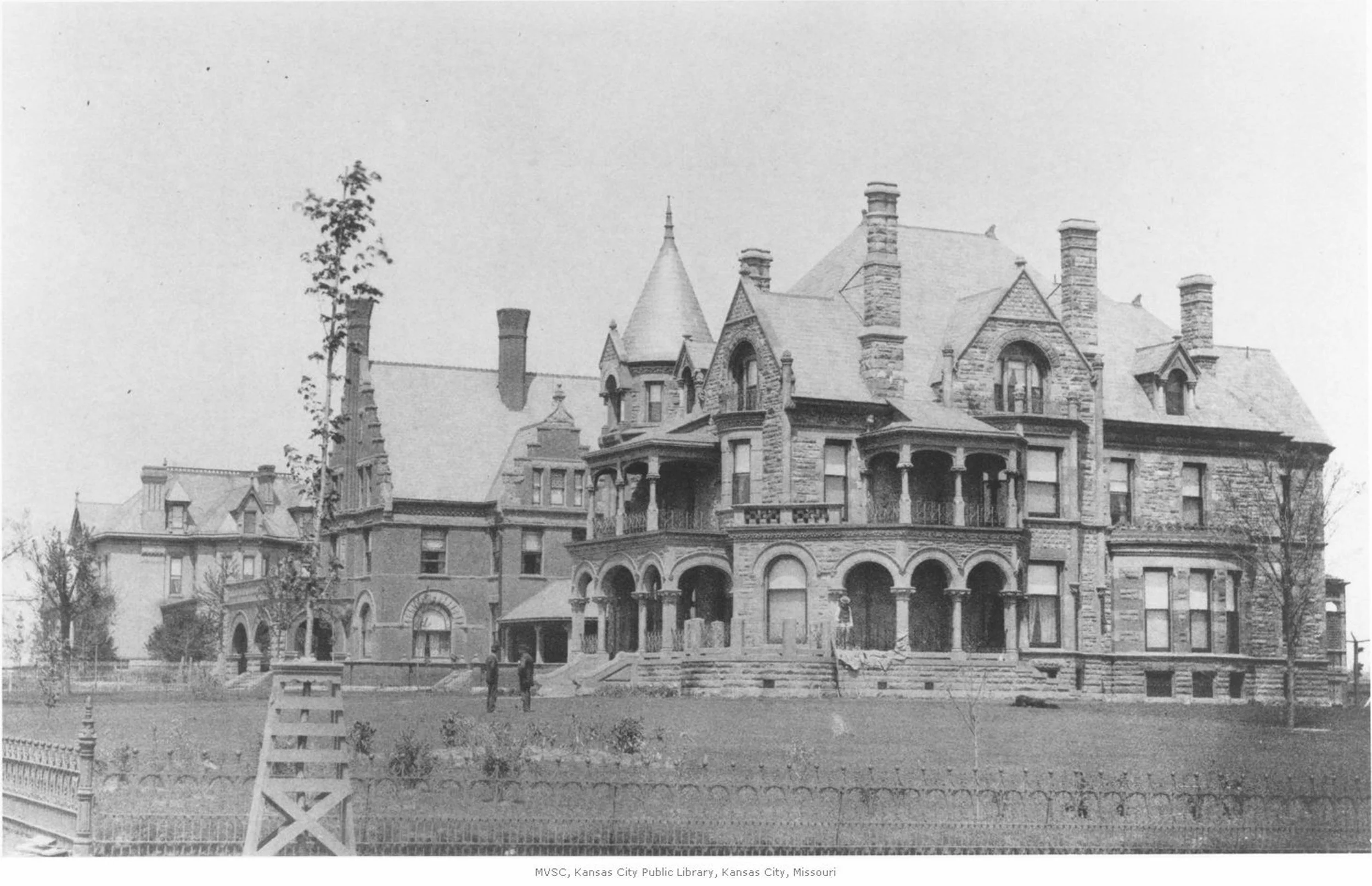
Photo: Residences of L. V. Harkness (right), O. C. McWilliams, and Web Withers on the 3100 block of Troost. Missouri Valley Special Collections, Kansas City Public Library, Kansas City, Missouri.
Millionaire’s Row in Kansas City referred to a stretch of Troost Avenue between roughly 31st and 34th Streets that, in the late 1800s, was lined with the homes of some of the city’s wealthiest residents. The area began as a semi-rural “country” setting, attracting affluent families like Webster Withers, who built large estates as the city expanded outward. Prominent figures, including L. V. Harkness, added to the area’s reputation, leading locals to nickname it “Millionaire’s Row.”
By the early 1900s, the extension of streetcar lines and rapid urban growth transformed the corridor from residential estates into a more urbanized district. Large mansions were gradually demolished or repurposed to make way for commercial buildings, apartments, and entertainment venues. Developments such as the Wirthman Building and the Isis Theatre reflected this shift toward mixed-use commercial activity.
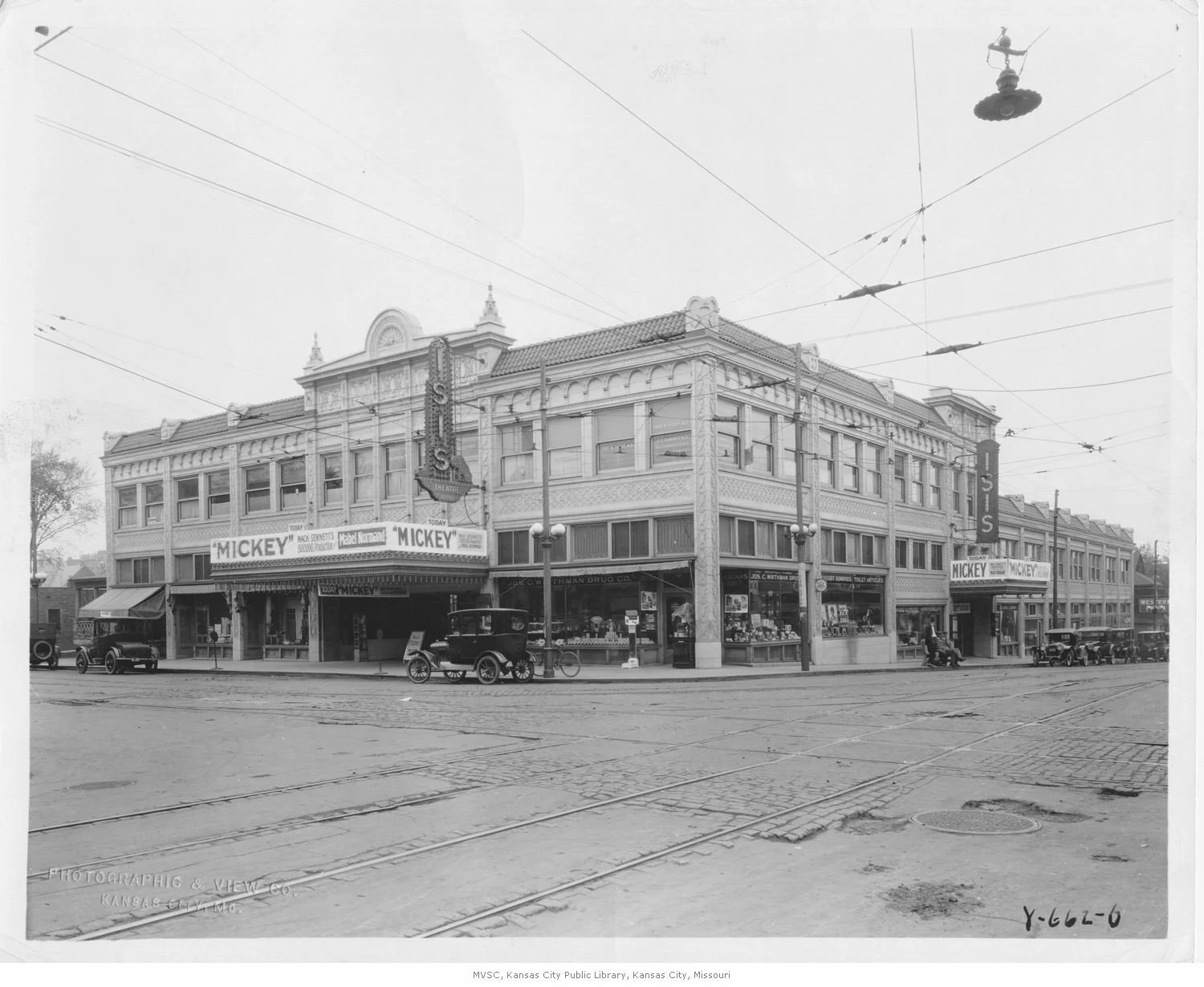
1918: Worthman Building / Isis Theatre. Courtesy: Missouri Valley Special Collections, Kansas City Public Library, Kansas City, MO
Economic changes, including the effects of the Panic of 1893 and later population growth, contributed to a broader transition in the neighborhood’s demographics. Over time, Troost Avenue evolved into a major commercial and cultural center, particularly for minority-owned businesses and communities. By the mid-20th century, the area had experienced significant decline, shaped in part by disinvestment and inequitable segregation-era policies.
Today, little physical evidence of Millionaire’s Row remains.
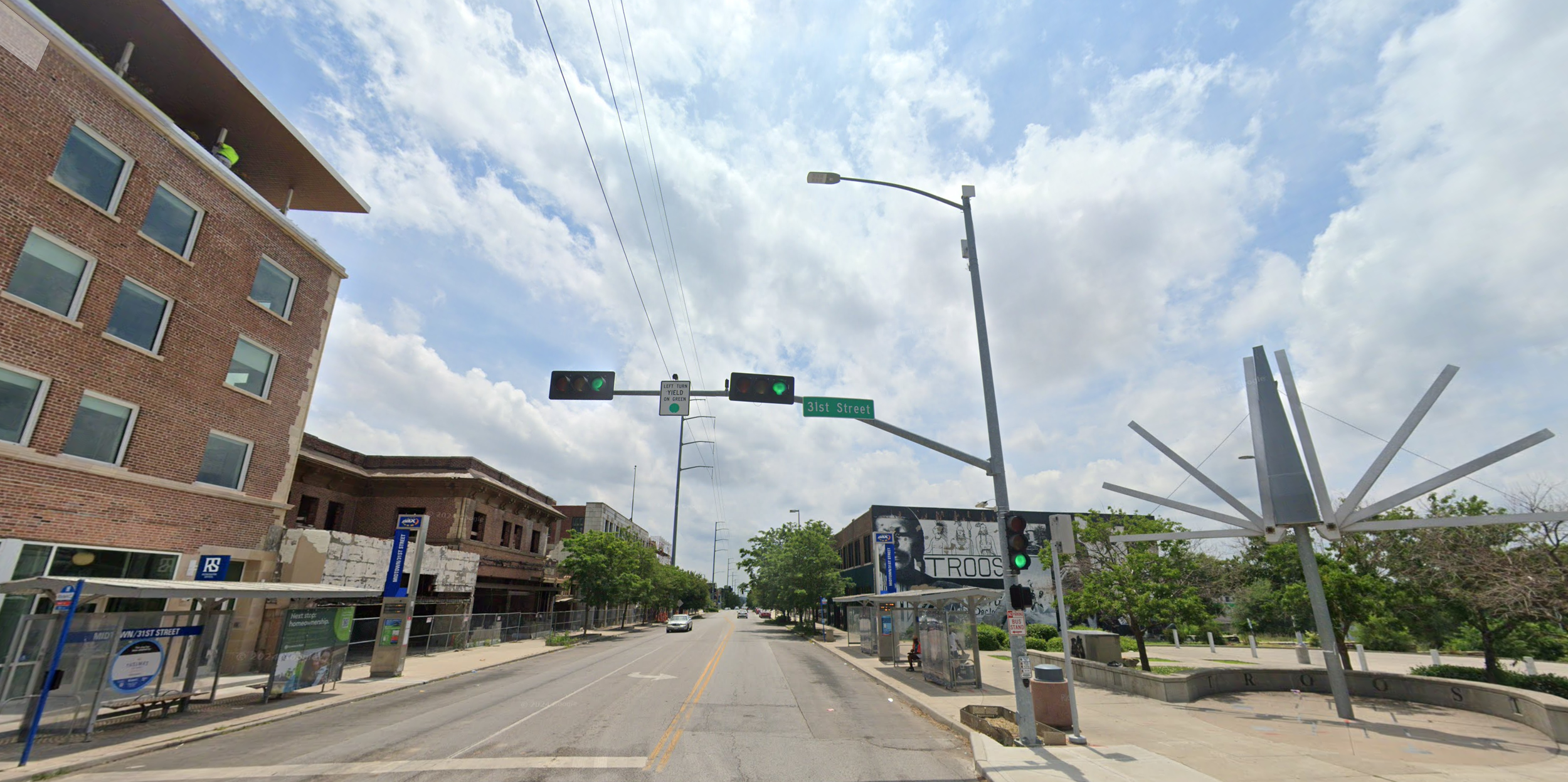
31st and Troost, looking south.