Historic Photos

Kansas City Union Station is a union station opened in 1914, serving Kansas City, Missouri, and the surrounding metropolitan area. It replaced a small Union Depot from 1878. Union Station served a peak annual traffic of more than 670,000 passengers in 1945 at the end of World War II, quickly declined in the 1950s, and was closed in 1985.
Looking for the black and white version? Union Station - 1920
Available in different sizes and materials. Images may appear slightly different after purchase depending on size and material. Contact for custom requests.

Kansas City Union Station is a union station opened in 1914, serving Kansas City, Missouri, and the surrounding metropolitan area. It replaced a small Union Depot from 1878. Union Station served a peak annual traffic of more than 670,000 passengers in 1945 at the end of World War II, quickly declined in the 1950s, and was closed in 1985.
Looking for the colorized version? Union Station - 1920 - Colorized
Available in different sizes and materials. Images may appear slightly different after purchase depending on size and material. Contact for custom requests.

The Kansas City Stockyards in the West Bottoms west of downtown Kansas City, Missouri flourished from 1871 until closing in 1991. Jay B. Dillingham was the President of the stockyards from 1948 to its closing in 1991.
The stockyards were built to provide better prices for livestock owners. Previously, livestock owners west of Kansas City could only sell at whatever price the railroad offered. With the Kansas City Livestock Exchange and the Stockyards, cattle were sold to the highest bidder.
The stockyards were established in 1871 on the Kansas side of the Kansas River along the Kansas Pacific and Missouri Pacific railroad tracks. In 1878 it expanded from its original 13 acres (53,000 m2) to 55, added loading docks on both the Kansas and Missouri Pacific tracks, new sheds for hogs and sheep, and developed one of the largest horse and mule markets in the country.
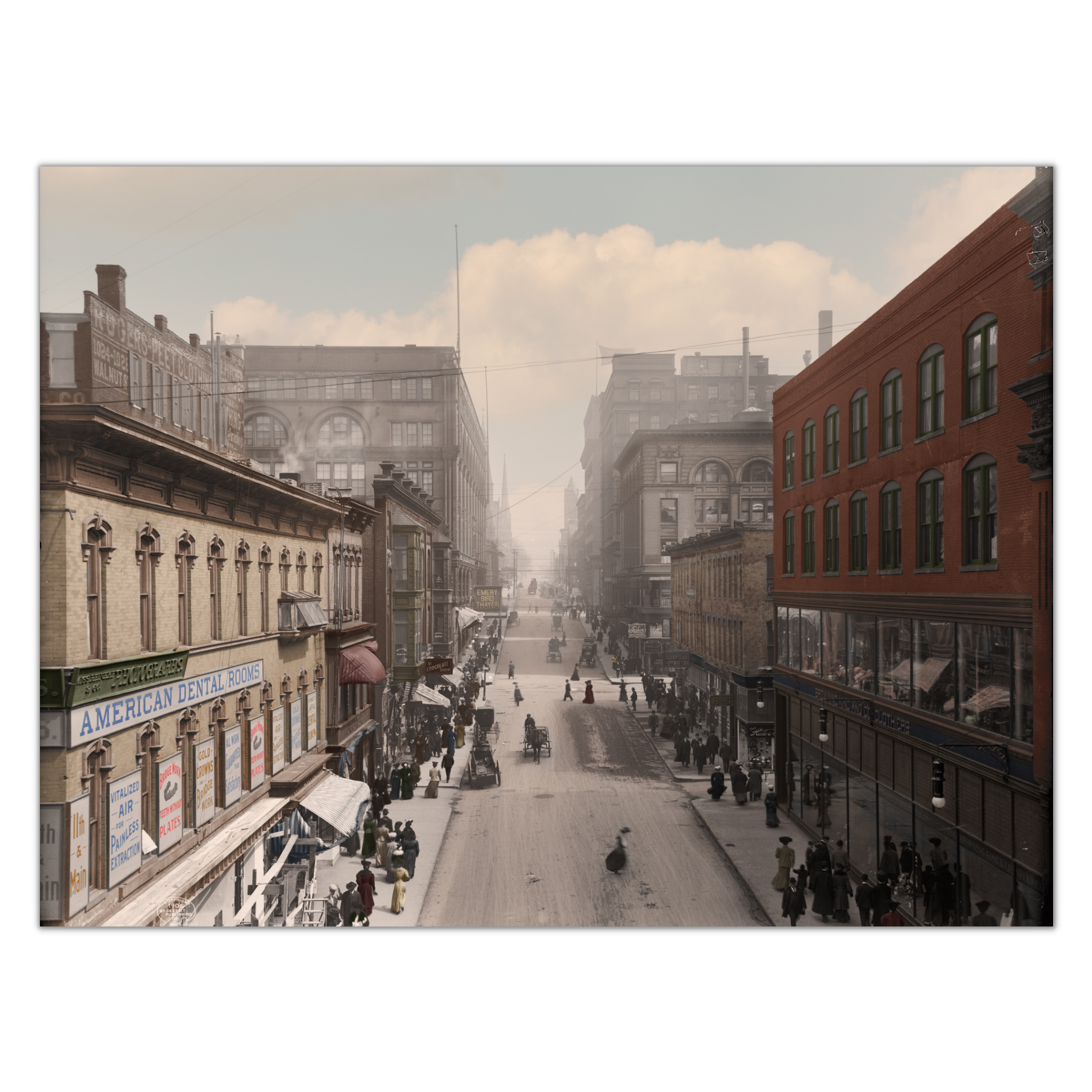
Petticoat Lane, known today as 11th Street, was an iconic stretch of real estate in downtown Kansas City famous for year-round fashion. During the holidays, garlands were strung across streets, anchored by large crowns that set the scene for Kansas City’s most fashionable retailers.
Looking for the black and white version? Petticoat Lane - 1906 Lane - 1906
Available in different sizes and materials. Images may appear slightly different after purchase depending on size and material. Contact for custom requests.

Petticoat Lane, known today as 11th Street, was an iconic stretch of real estate in downtown Kansas City famous for year-round fashion. During the holidays, garlands were strung across streets, anchored by large crowns that set the scene for Kansas City’s most fashionable retailers.
Looking for the colorized version? Petticoat Lane - 1906 - Colorized- 1906 - Colorized
Available in different sizes and materials. Images may appear slightly different after purchase depending on size and material. Contact for custom requests.

At its northern terminus, Main Street begins at the Missouri River as a dead end street, with heavier traffic supported as a main street south of 6th Street south to Emanuel Cleaver II Boulevard and Brookside Boulevard. The street becomes a neighborhood street south of the Plaza with interrupted service continuing to 97th Street.
Available in different sizes and materials. Images may appear slightly different after purchase depending on size and material. Contact for custom requests.

Junction of Main and Delaware Streets, looking north.
Looking for the black and white version? Main & Delaware - 1906 - 1906
Available in different sizes and materials. Images may appear slightly different after purchase depending on size and material. Contact for custom requests.

Junction of Main and Delaware Streets, looking north.
Looking for the colorized version? Main & Delaware - 1906 - Colorized
Available in different sizes and materials. Images may appear slightly different after purchase depending on size and material. Contact for custom requests.

The first Kansas City Livestock Exchange building was 105 by 127 feet, three stories high, of brick with stone trim. It was built in 1876 at a cost of $35,000 just west of State Line at 16th Street.
The building provided offices for the stockyards company and commission men besides two banking rooms, a restaurant, billiard hall and barber shop. It afforded for the first time adequate, modern facilities for market operations. Through the years it was enlarged and improved many times, with wings extending from the corners.
In June 1903 came the great flood, its crest sweeping the West Bottoms from bluff to bluff to a depth of 15 to 30 feet. Water reached the second floor of the aging exchange building. Afterwards cracks appeared in the building and plans were made to replace it. Today's Kansas City Livestock Exchange building at 16th and Genessee was built in 1909-1911. It still serves as headquarters for the Kansas City market.
Looking for the black and white version? Livestock Livestock Exchange - 1906 - 1906
Available in different sizes and materials. Images may appear slightly different after purchase depending on size and material. Contact for custom requests.

The first Kansas City Livestock Exchange building was 105 by 127 feet, three stories high, of brick with stone trim. It was built in 1876 at a cost of $35,000 just west of State Line at 16th Street.
The building provided offices for the stockyards company and commission men besides two banking rooms, a restaurant, billiard hall and barber shop. It afforded for the first time adequate, modern facilities for market operations. Through the years it was enlarged and improved many times, with wings extending from the corners.
In June 1903 came the great flood, its crest sweeping the West Bottoms from bluff to bluff to a depth of 15 to 30 feet. Water reached the second floor of the aging exchange building. Afterwards cracks appeared in the building and plans were made to replace it. Today's Kansas City Livestock Exchange building at 16th and Genessee was built in 1909-1911. It still serves as headquarters for the Kansas City market.
Looking for the colorized version? Livestock Exchange - 1906 - Colorized - 1906 - Colorized
Available in different sizes and materials. Images may appear slightly different after purchase depending on size and material. Contact for custom requests.

The Jackson County courthouse, built of native stone with several turrets and a slate roof, was opened April 14, 1892. It occupied a square block, Oak to Locust streets, Fifth street to Missouri avenue.
It replaced an earlier courthouse at the northeast corner of Second and Main streets, which was built in 1868 by a sock company, an originally was intended for a hotel.

Grand Avenue is a north/south street in Kansas City, Missouri. Grand runs along the 200 east block in the Kansas City street grid system.
The street was renamed Grand Boulevard of the Americas from 3rd Street to 22nd Street in honor of the Organization of American States.

Since its inception in 1857, the City Market has been one of the largest and most enduring public farmers' markets in the Midwest, linking growers and small businesses to the Kansas City community. There are more than 40 full-time tenants that are open year-round with an eclectic mix of independently owned shops and dining.
You may also be interested in the black and white version here: City Market - 1906 - 1906
Available in different sizes and materials. Images may appear slightly different after purchase depending on size and material. Contact for custom requests.

Since its inception in 1857, the City Market has been one of the largest and most enduring public farmers' markets in the Midwest, linking growers and small businesses to the Kansas City community. There are more than 40 full-time tenants that are open year-round with an eclectic mix of independently owned shops and dining.
You may also be interested in the colorized version here: City Market - 1906 - Colorized Market - 1906 - Colorized
Available in different sizes and materials. Images may appear slightly different after purchase depending on size and material. Contact for custom requests.
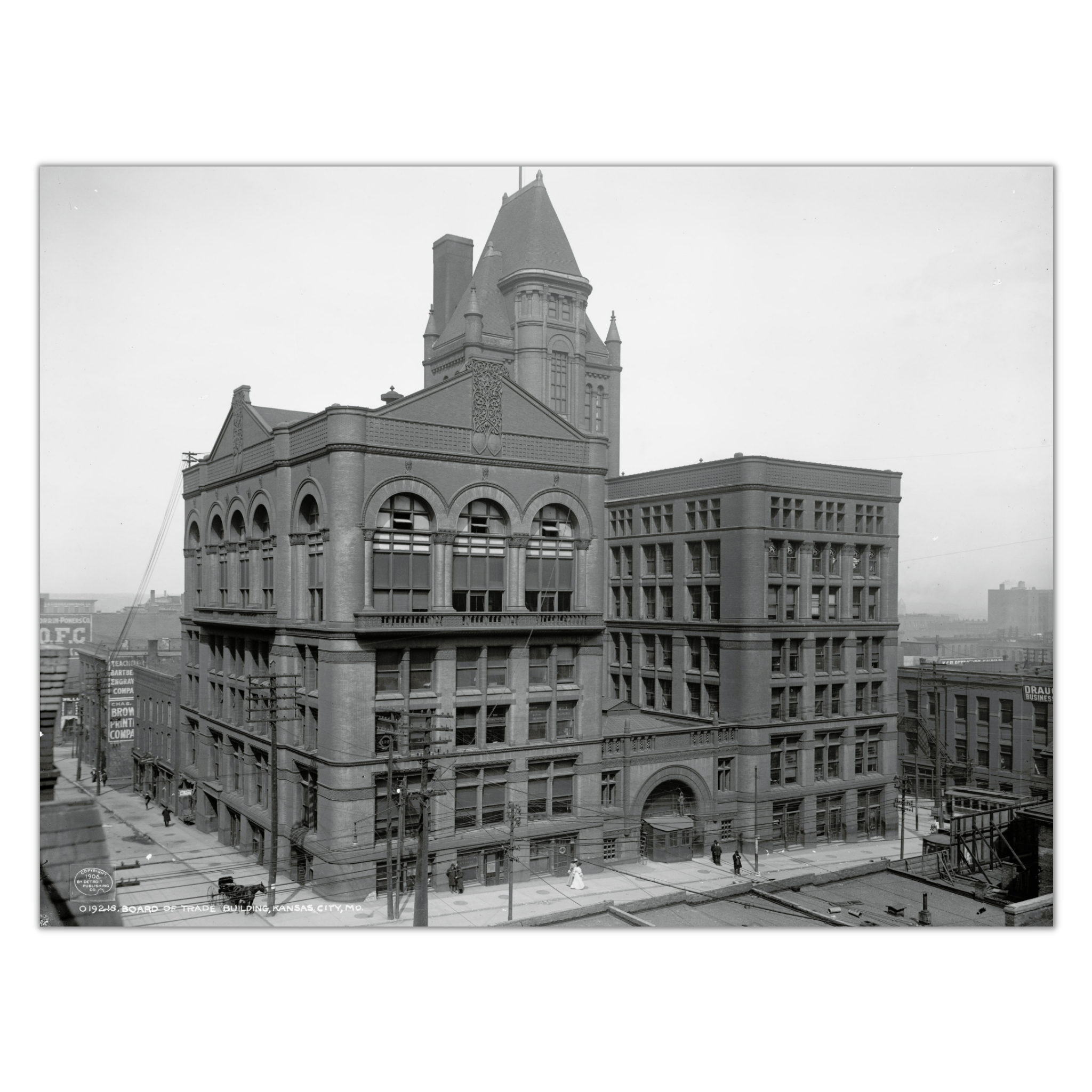
The exchange was organized in 1856, shortly after Kansas City itself was incorporated in 1853, and served as the city's chamber of commerce.
It was originally located at 8th and Wyandotte Streets.
In 1925, the exchange moved to 10th and Wyandotte Streets and in 1966, it moved to its last location at 48th and Main Streets on the Country Club Plaza.
Available in different sizes and materials. Images may appear slightly different after purchase depending on size and material. Contact for custom requests.
Walnut Street, Kansas City, Missouri
Available in different sizes and materials. Images may appear slightly different after purchase depending on size and material. Contact for custom requests.