The Story of the Arabia Steamboat
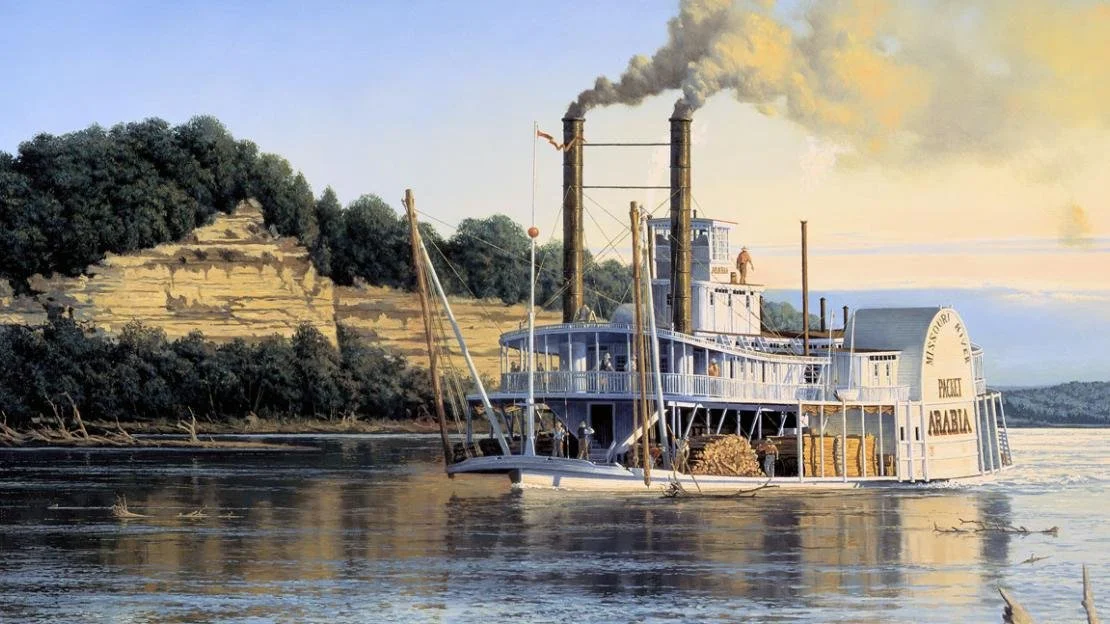
The Arabia Steamboat was a side-wheel packet built in 1853 at Brownsville, Pennsylvania, for work on the inland rivers of the American Midwest. Measuring about 171 feet in length with 28-foot paddlewheels, it burned roughly 30 cords of wood per day and could make a little over five miles per hour upstream—respectable speed on the Missouri. After service on the Ohio and Mississippi, the boat was purchased by Capt. John Shaw for Missouri River trade. Its first Missouri voyage carried 109 U.S. soldiers from Fort Leavenworth to Fort Pierre in present-day South Dakota, and then farther up the Yellowstone, a nearly three-month round trip that demonstrated both the reach and the risks of frontier navigation.
Commerce and conflict intersected on Arabia’s decks. In March 1856, pro-slavery “Border Ruffians” stopped and searched the vessel near Lexington, Missouri, seizing rifles and two cannons that had been hidden in crates marked “Carpenters’ Tools” and reportedly destined for the free-state Kansas Territory. That same spring the steamer changed hands to Capt. William Terrill and William (or George) Boyd, who ran at least fourteen trips on the Missouri despite mishaps common to the river—groundings, a damaged rudder, and a blown cylinder head—all repaired to keep the boat in service.
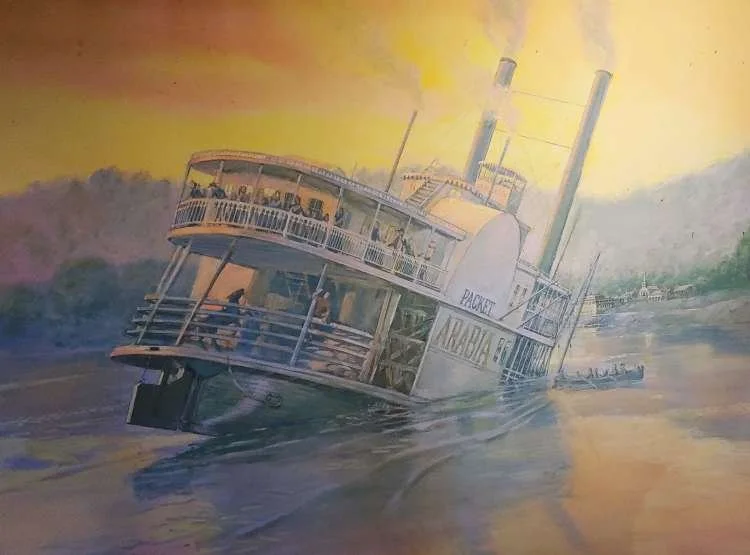
The Missouri’s greatest threat was invisible: snags—tree trunks lodged in the channel just beneath the surface. On September 5, 1856, while ascending near Quindaro Bend by Parkville (outside today’s Kansas City), Arabia’s oak hull struck a submerged sycamore/walnut snag. Water rushed in, and the boat settled quickly into the soft riverbed. Passengers and crew escaped in the single skiff and by clambering to shore; only a mule tethered below decks was lost.
By morning, just the smokestacks and pilothouse peeked above the current; within days even those traces were gone. Over subsequent decades the Missouri shifted course roughly a half-mile east, burying the wreck under deep layers of silt on private farmland.
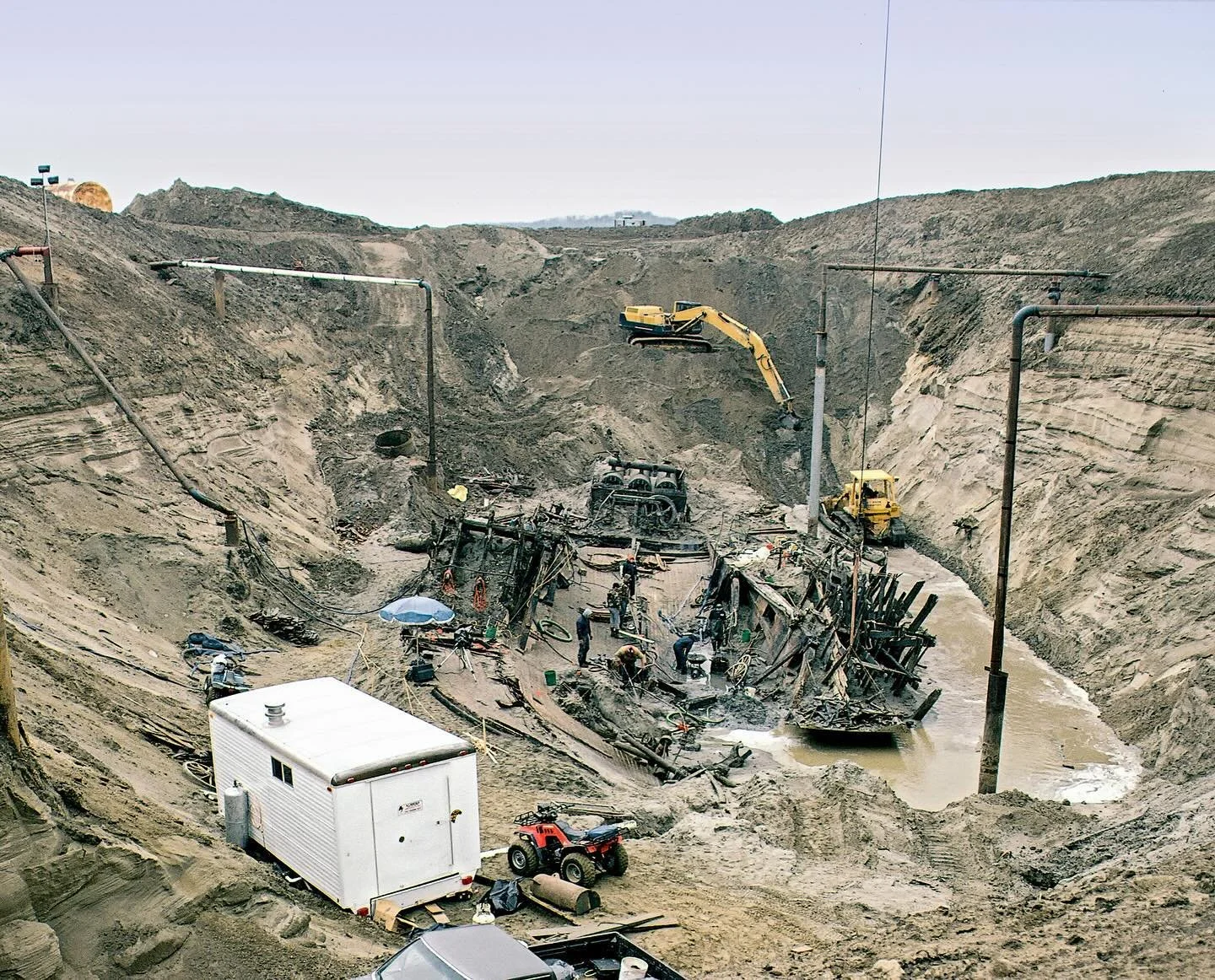
Courtesy Arabia Steamboat Museum.
Family stories kept the legend alive. In 1987, Kansas Citians Bob Hawley and his sons, Greg and David—joined by Jerry Mackey and David Luttrell—used historic maps, a proton magnetometer, and metal detection to pinpoint the site about 45 feet below ground and half a mile from the modern channel. With the landowners’ permission and a winter deadline before spring planting, the team ringed the area with twenty irrigation pumps and 65-foot wells that together lowered the water table by an estimated 20,000 gallons per minute.
Heavy equipment and a 100-ton crane exposed the hull on November 26, 1988. Four days later the first artifact—a vulcanized rubber overshoe—emerged, followed by crates of intact china and thousands of goods preserved anaerobically in the mud, including sealed jars of bright-green pickles. Machinery such as boilers, an engine, the anchor, and the paddlewheel were also recovered. Work ceased in February 1989; the pumps were turned off, and the pit refilled with water—then soil—returning the farm to use.
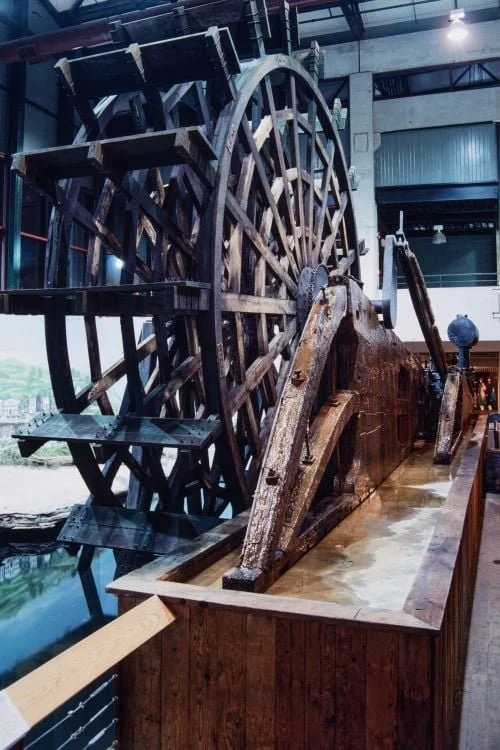
Courtesy Arabia Steamboat Museum.
In 1991 the Arabia Steamboat Museum opened in Kansas City’s River Market to house and interpret what is considered the largest single collection of pre–Civil War frontier cargo recovered from a U.S. river wreck. The exhibits include large sections of the vessel, galleries on river transportation and regional history, and an active conservation lab.