The Story of the Rock Island Bridge
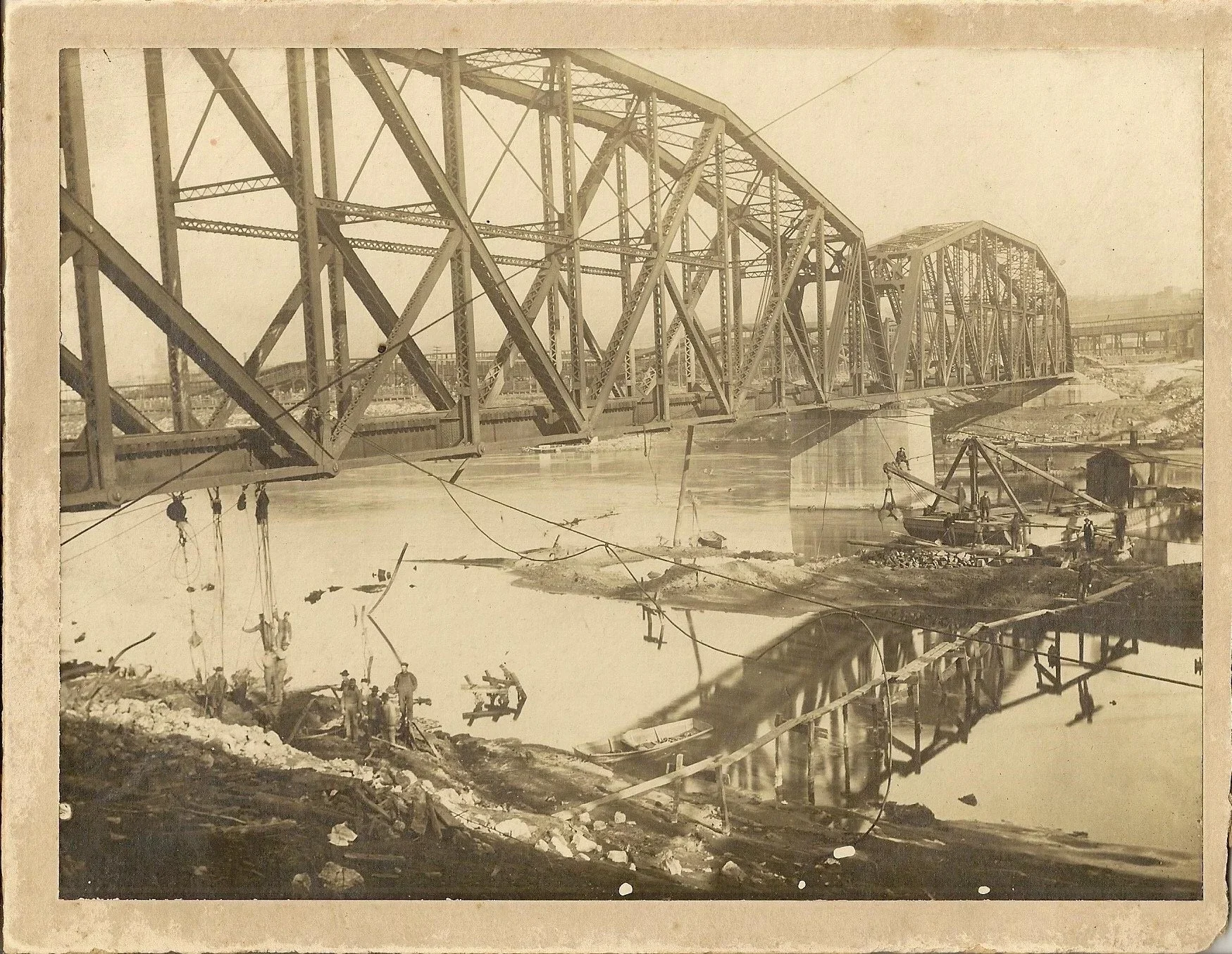
Photo courtesy of Flying Truss, LLC.
For over a century, the Rock Island Bridge has stood as a steel sentinel over the Kansas (Kaw) River, reflecting the industrial evolution of the Kansas City Stockyards. Once the second-largest beef processing center in the world, this district relied on robust rail infrastructure to move millions of head of livestock. The story of the current bridge begins with the devastating flood of 1903, which swept away the railroad’s original wooden structure, necessitating a more permanent solution.
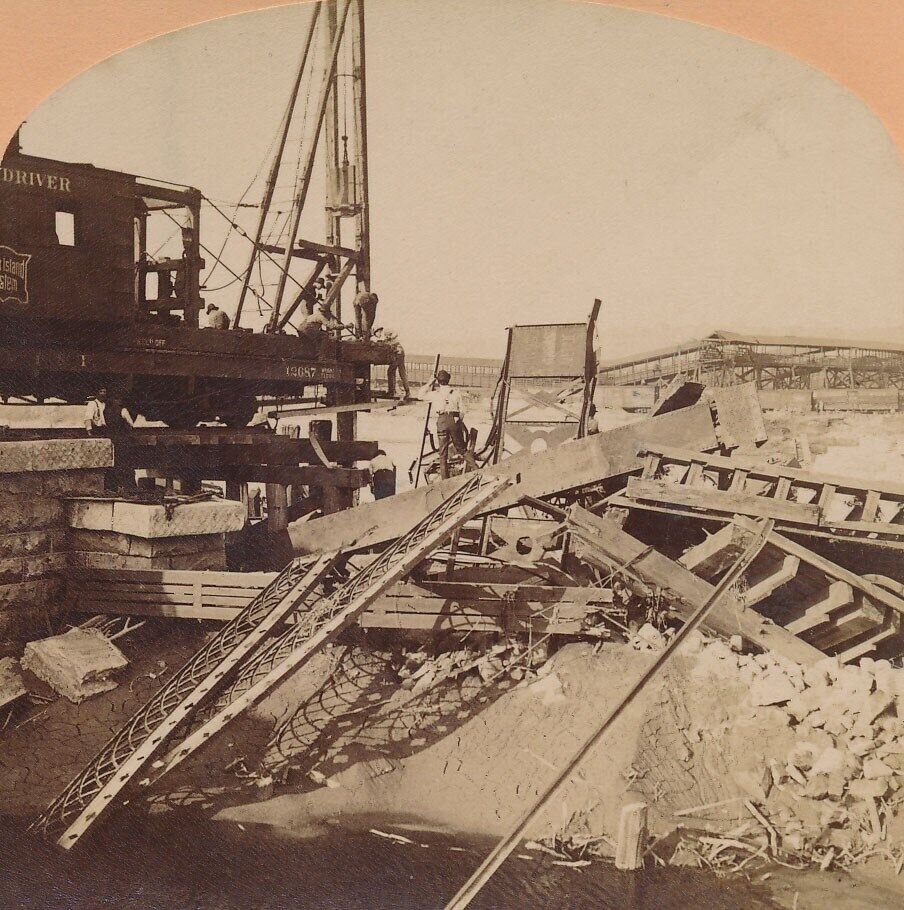
A wooden bridge was destroyed in the 1903 Kansas River flood, and was replaced by the Rock Island Bridge.
In 1905, the Chicago, Rock Island and Pacific Railroad commissioned the American Bridge Company to construct a formidable replacement. The design featured two 302-foot Pennsylvania through-truss spans built with Carnegie steel and anchored by concrete foundations sunk 40 feet into the riverbed. In 1921, the bridge reached its current length of 705 feet when the U.S. Army Corps of Engineers added a third, shorter truss span to the eastern end to accommodate a widened river channel.
The bridge’s structural integrity was famously tested during the Great Flood of 1951. While the surrounding West Bottoms suffered nearly a billion dollars in damage, the bridge remained intact. To prevent future catastrophes, the Army Corps of Engineers hired L.G. Barcus and Sons to install a unique protective system: four massive screw-lift gates capable of raising the trusses six feet to clear rising debris and water.
As the meatpacking industry decentralized and rail traffic dwindled, the bridge’s utility faded. The Rock Island Railroad ceased operations in the 1970s and was liquidated in 1980. That same year, the City of Kansas City, Missouri, purchased the structure with plans to use it as a pedestrian link for Kemper Arena parking. However, those plans never materialized, and the bridge sat dormant for four decades, becoming a rusted relic of the city's "Cowtown" roots.
In 2022, ownership transferred to the Unified Government of Wyandotte County and Kansas City, Kansas, for $1, sparking a public-private partnership with the startup Flying Truss, LLC. This redevelopment is transforming the bridge into America’s first trailhead and entertainment district over a river.
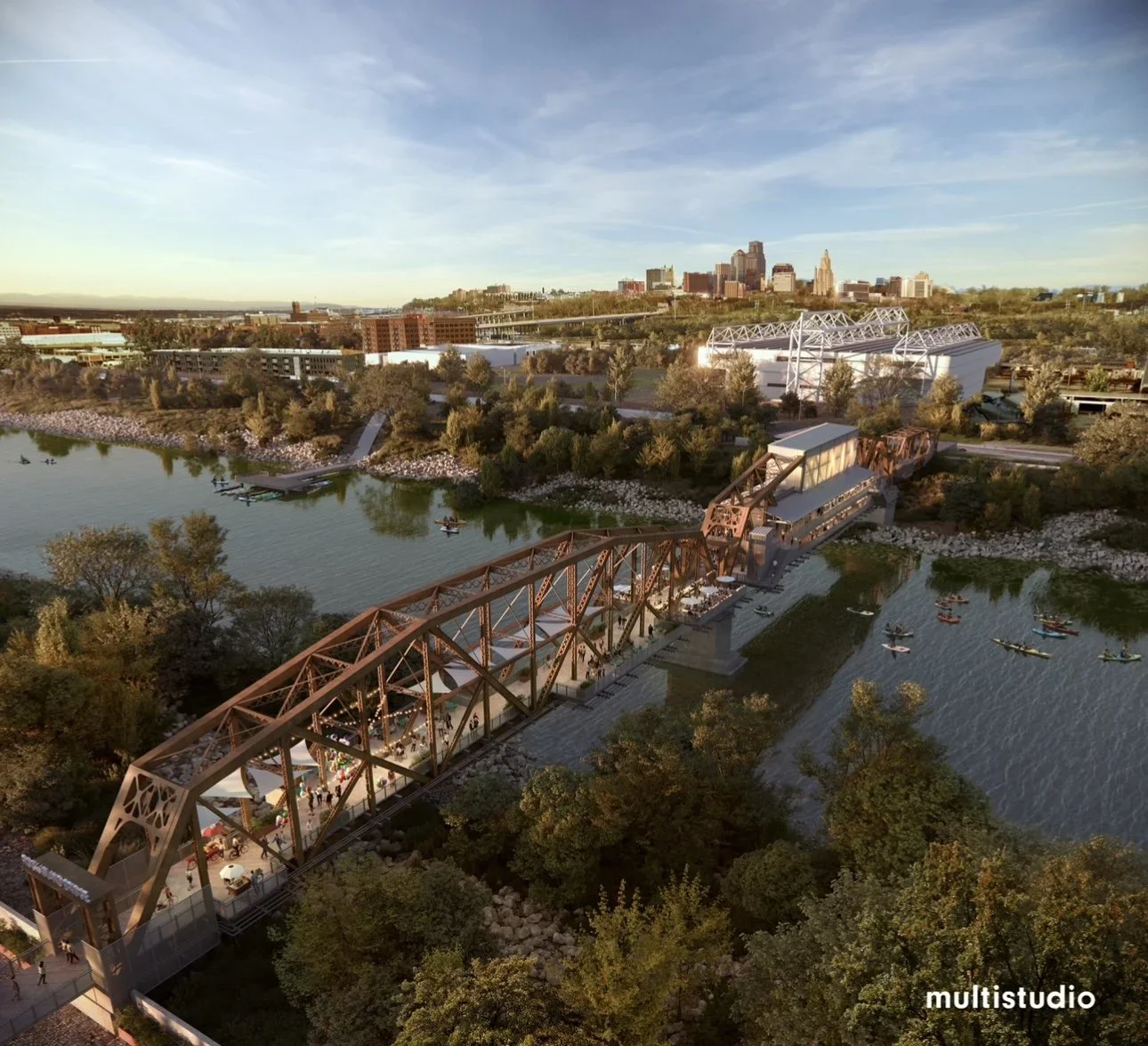
Rendering courtesy of Flying Truss, LLC.
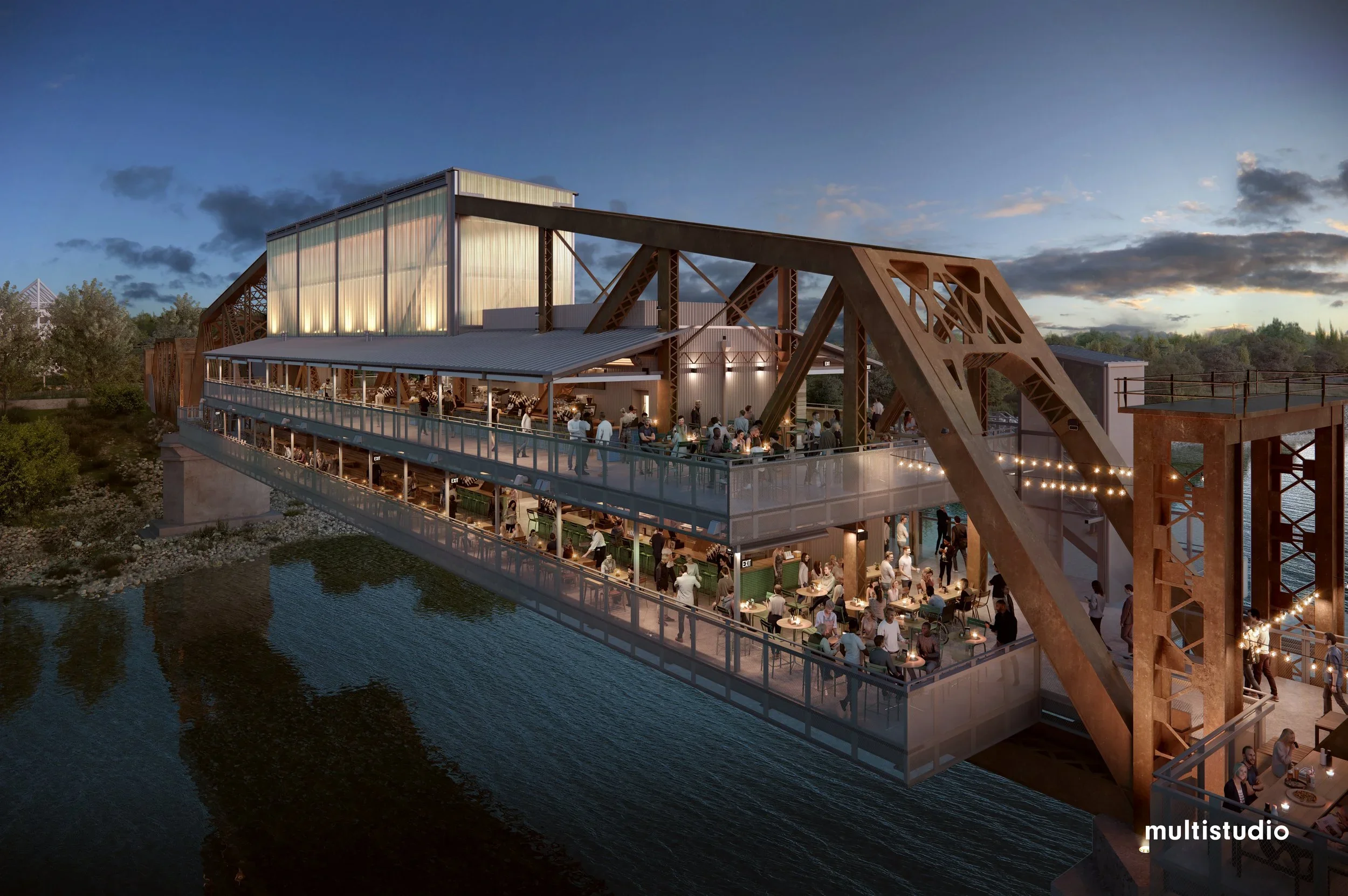
Rendering courtesy of Flying Truss, LLC.
The project involves raising the structure to meet modern levee standards—utilizing the original 1950s screw jacks—and adding 11,000 square feet of concrete decking. Once complete, the bridge will serve as a vibrant community "steel park," featuring kitchens, bars, and event spaces while connecting regional levee trails, finally reclaiming the riverfront for public use.
The new entertainment district will open on April 1, 2026.