The Story of Vaughan’s Building & The Junction
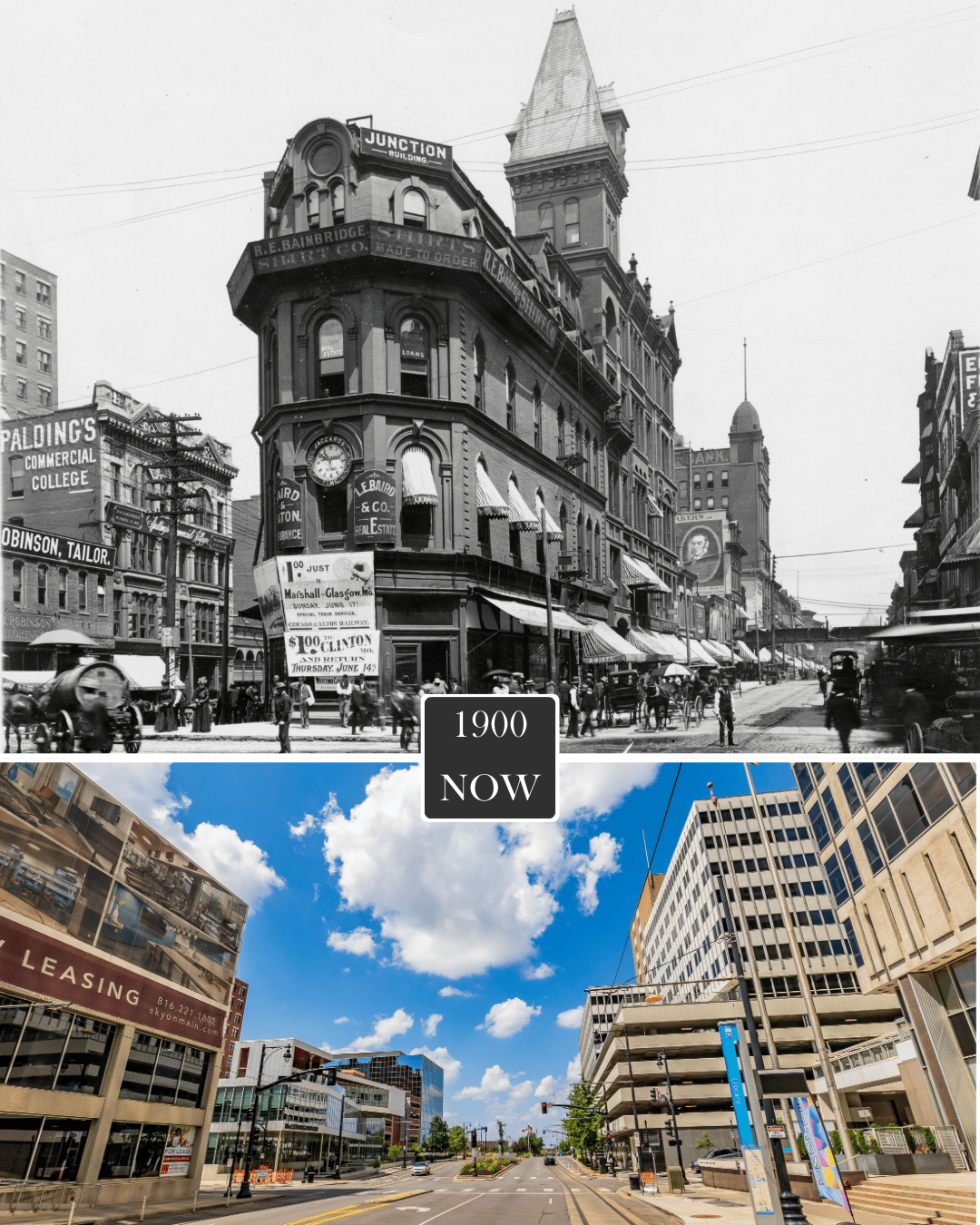
Historic photo courtesy: Missouri Valley Special Collections, Kansas City Public Library, Kansas City, MO. Modern day photo by KC Yesterday.
In the heart of downtown KC once stood Vaughan's Diamond, a prominent building at the convergence of Delaware and Main streets at 9th St. The location held historical significance, being the starting point of an old Indian trail and later becoming a hub of commerce and activity.
Originally, Kansas City's business district was situated along the riverfront for easy access to riverboat traffic. However, as the city expanded southward, developers faced challenges carving out streets from the bluffs.
In the late 1840s, the Elijah Jackson farm occupied the area that would later become known as "The Junction" at 9th St. Surrounded by dense forests, the farm was isolated from the bustling activity of the growing city.
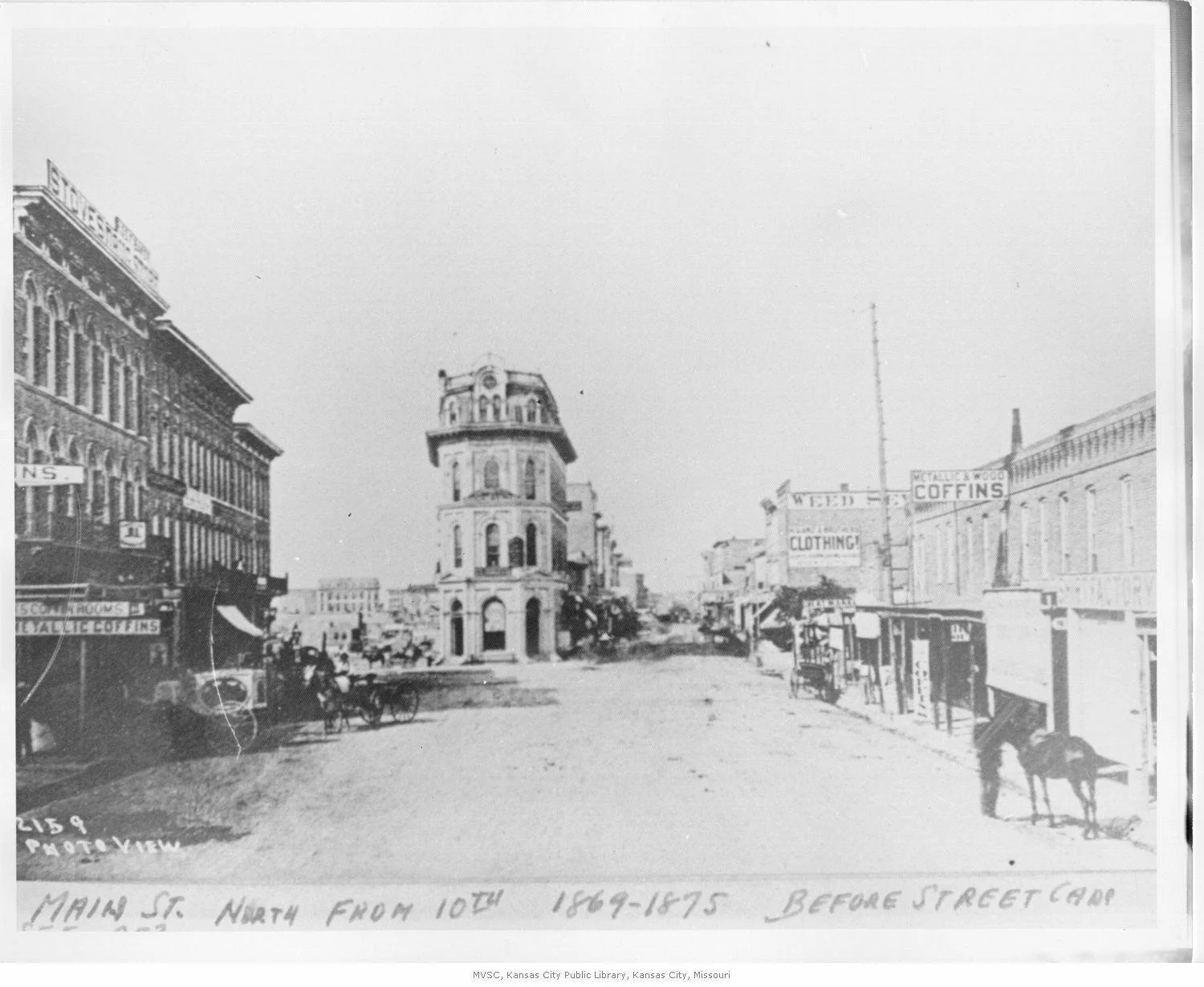
Courtesy: Missouri Valley Special Collections, Kansas City Public Library, Kansas City, MO
In 1857, William H. Ross and Nathan Scarritt platted Ross & Scarritt's Addition, including the unusual plan of having Main and Delaware streets converge at a point. This resulted in the creation of a narrow, diamond-shaped piece of land where the two streets met. Despite its unpromising appearance, real estate investor Samuel D. Vaughan saw potential in this unique plot.
In 1866, Vaughan purchased the narrow lots and hired architect Asa Beebe Cross to design a building that would capitalize on the topography. The resulting four-story structure, completed in 1870 for $33,000, became known as Vaughan's Diamond. Its distinctive diamond shape and elegant architecture made it a notable landmark in the burgeoning city.
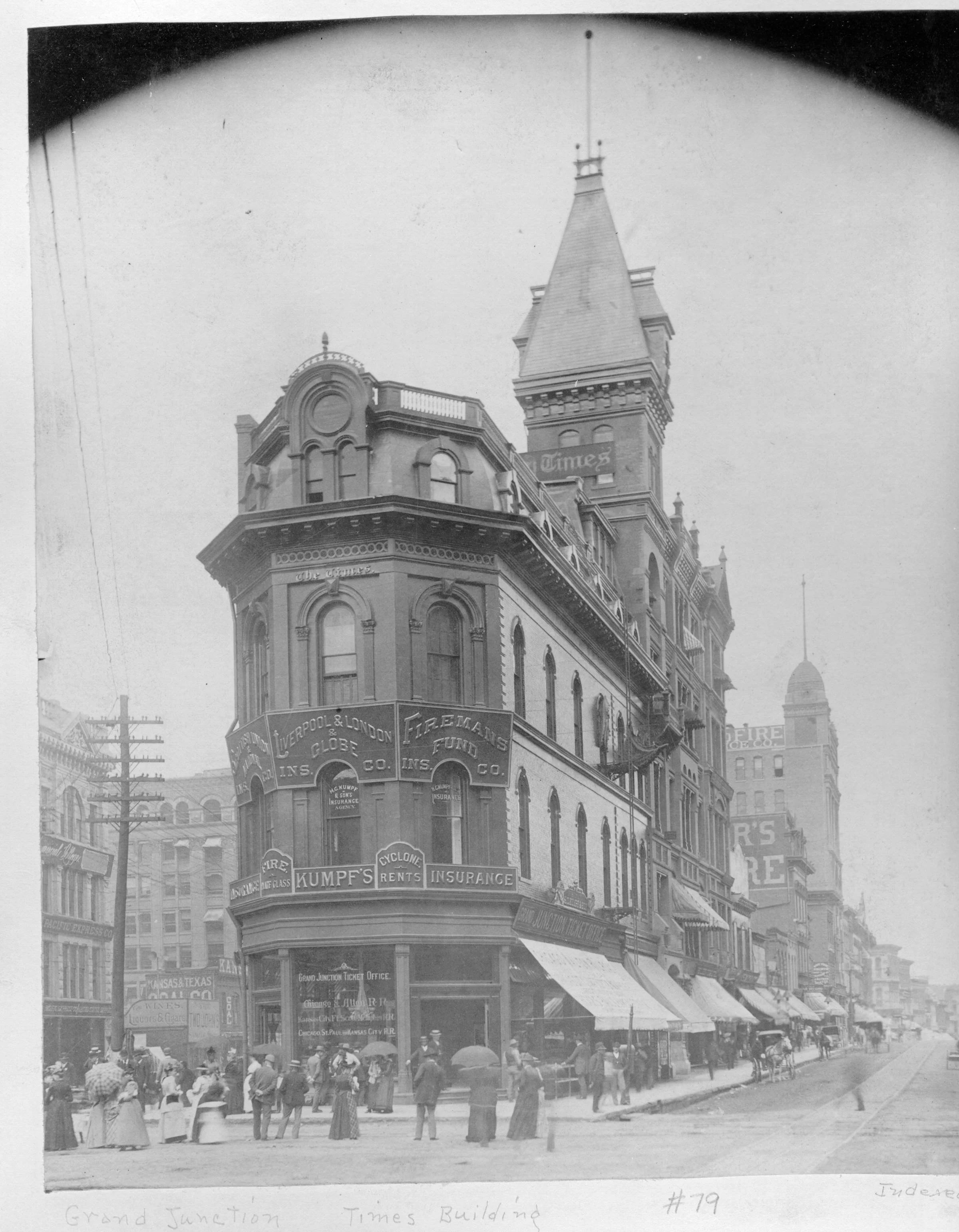
1885: The Kansas City Times Building (formerly Vaughan's Building). Courtesy: Missouri Valley Special Collections, Kansas City Public Library, Kansas City, MO
Initially housing Vaughan's real estate office, the building soon became a focal point of the bustling business district. In 1883, it was acquired by The Kansas City Times newspaper, which expanded its operations and added a tower to the building. Renamed The Junction Building, it became a symbol of the city's growth and prosperity.
The intersection of 9th, Main, and Delaware streets was a bustling hub of activity, particularly with the introduction of cable cars in 1883. Michael Tuite, known as "Wideawake," served as the flagman, ensuring the safety of pedestrians and vehicles navigating the steep hill at 9th St. His vigilant presence earned him legendary status among Kansas Citians.
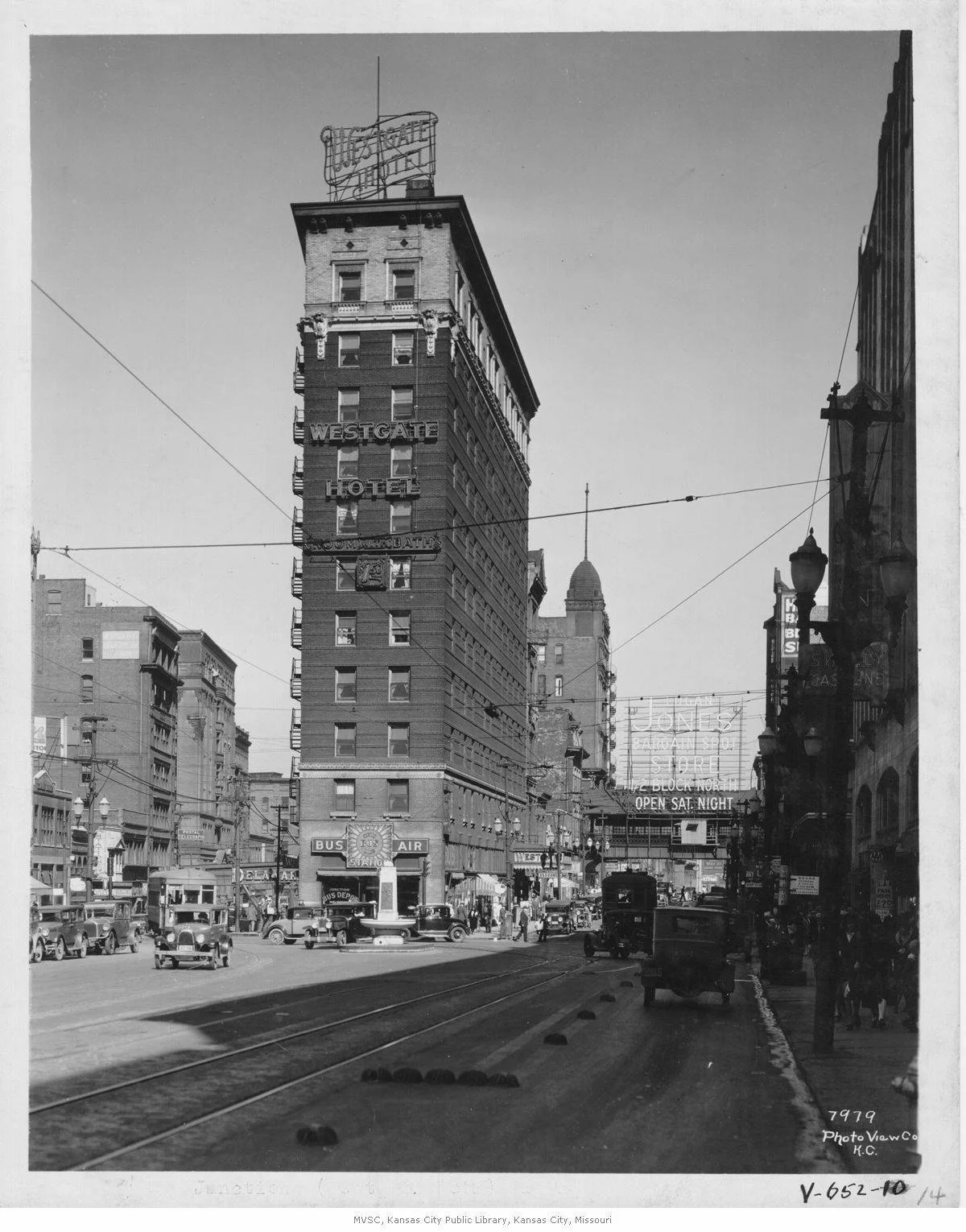
1920: Westgate Hotel. Courtesy: Missouri Valley Special Collections, Kansas City Public Library, Kansas City, MO
However, the heyday of Vaughan's Diamond and The Junction was short-lived. In 1911, the building was sold and demolished to make way for the Westgate Hotel, which opened in 1916. Despite its initial success, the hotel faced challenges and was eventually demolished in 1954 as part of urban renewal efforts.
Today, the site of Vaughan's Diamond is marked by the "Muse of Missouri" statue, serving as a reminder of the city's rich history and the vibrant legacy of a once-prominent landmark.
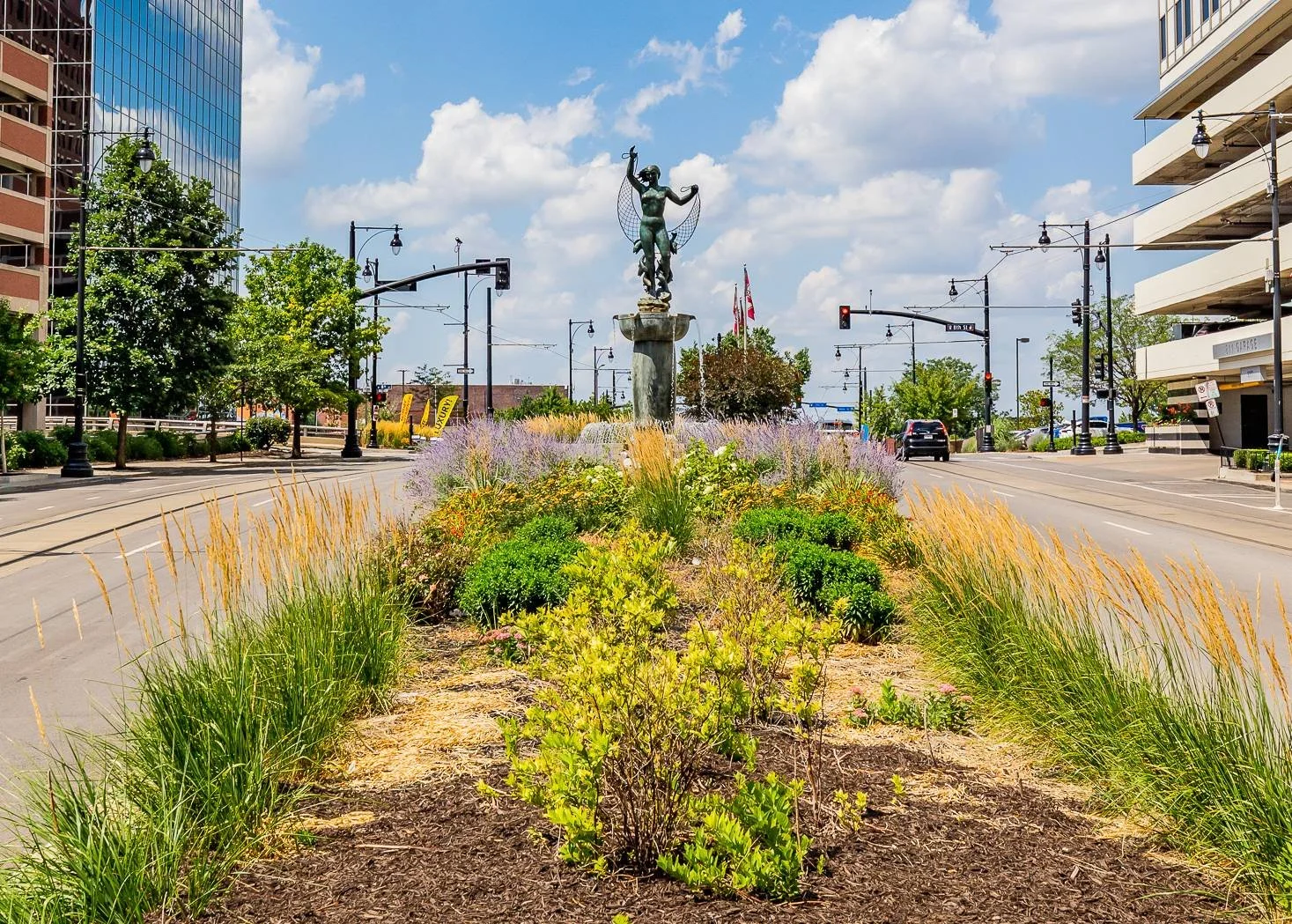
Modern day location. Photo by KC Yesterday.